
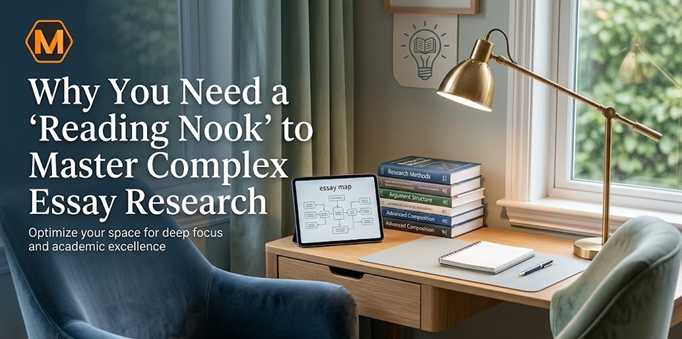
In the world of interior design, we often talk about “zones”—the kitchen is for nourishment, the bedroom is for rest, and the living room is for connection. But for the modern student or academic professional, there is a missing link in the home floor plan: the sanctuary of thought. When you are tasked with deconstructing a 12-page peer-reviewed journal or synthesizing a complex thesis, the kitchen table simply won’t cut it. To master complex essay research, you need a dedicated reading nook.
Creating a specialized environment for deep work is more than just a home decor trend; it is a functional necessity for academic success. When you designate a specific corner of your home for reading and analysis, you are training your brain to enter a state of high-level concentration the moment you sit down. This is particularly helpful when you are grappling with frustrating academic questions or debating the ethics of modern schooling. For instance, many students find themselves researching deep legal and social history to argue is homework illegal, and finding clear answers in a cluttered room is nearly impossible, which is why myassignmenthelp resources emphasize the importance of a structured study environment to tackle such complex queries.
The Science of Spatial Anchoring
The primary reason a reading nook works so well is a psychological concept called “spatial anchoring.” Our brains are incredibly efficient at associating physical locations with specific mental behaviors. This is a form of environmental conditioning. If you study in bed, your brain associates that space with sleep, leading to a drop in focus. If you work at the dining table, your mind may drift toward social interactions or your next meal.
A reading nook serves one singular purpose: the absorption and processing of knowledge. By removing the “noise” of multi-purpose rooms, you significantly reduce your cognitive load. Cognitive load refers to the amount of working memory your brain uses. In a cluttered or loud environment, your brain wastes energy “filtering out” distractions. In a nook, that energy is redirected entirely toward the synthesis of your essay’s core arguments.
Designing the “High-Performance” Nook
A high-performance nook is not about expensive furniture; it is about intentionality. To rank your space as a top-tier research zone, you should follow a specific design hierarchy.
| Element | Purpose | Ideal Setup |
| Ergonomics | Physical Stamina | A chair with lumbar support and a footrest. |
| Lighting | Eye Health | Layered lighting: Natural light + Warm LED desk lamp. |
| Acoustics | Focus Depth | Noise-canceling headphones or acoustic wall panels. |
| Surface | Material Flow | A small side table for a notebook, tablet, and water. |
| Biophilia | Stress Reduction | A small indoor plant (Snake plant or Pothos). |
When these elements come together, they create what psychologists call a “flow state” environment. In this zone, the hours you spend deconstructing peer-reviewed journals or planning an expository essay writing service level of detail feel less like a chore and more like a focused mission. Mastering the structure of your arguments becomes much easier when your body is relaxed and your mind is free from environmental distractions.
The Role of Sensory Design in Research
Many decorators overlook the “sensory” aspect of a study space. Research is an intensive mental marathon, and your senses can either support you or sabotage you.
1. Task-Based Lighting
Natural light is the gold standard for daytime research. It keeps your circadian rhythm in check and boosts serotonin, which is essential for maintaining morale during difficult projects. However, for late-night sessions, avoid harsh “cool white” bulbs. These mimic daylight and can trick your brain into staying awake long after your session is over. Instead, use warm-toned bulbs that create a cozy, “library” feel.
2. Color Theory for Concentration
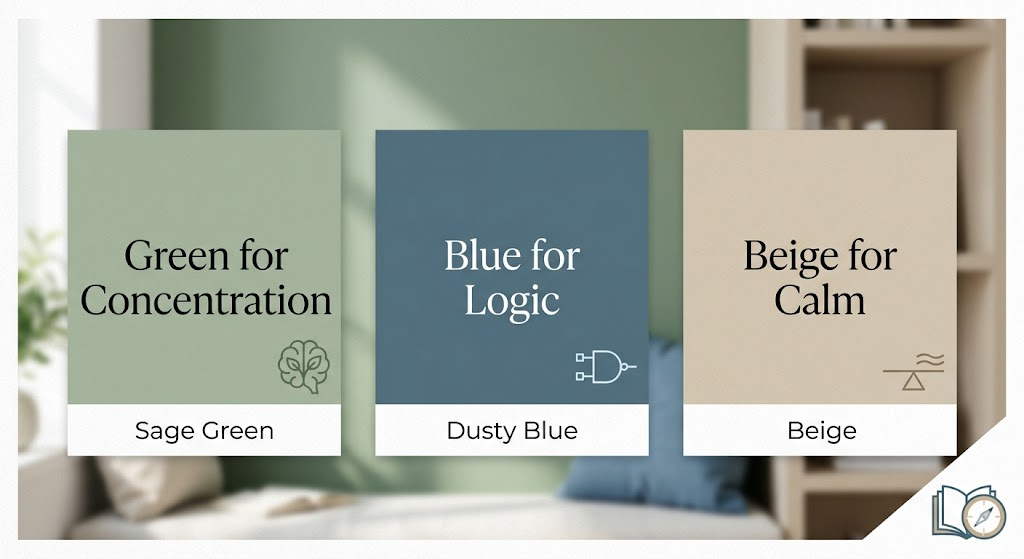
The colors surrounding you can change your heart rate. While vibrant reds or oranges might look great in a kitchen, they are too stimulating for a research corner. Soft blues, sage greens, or neutral earth tones are proven to improve concentration. Blue, in particular, is associated with logic and calm, making it the perfect backdrop for a deep dive into complex data.
3. Acoustic Architecture
If you live in a noisy apartment, your nook needs “acoustic buffers.” This could be as simple as a thick rug to dampen floor noise or a bookshelf filled with books, which acts as a natural sound diffuser. The goal is to create a “cone of silence” where the outside world disappears, leaving only you and your research.
Bridging the Gap Between Research and Writing
Why does the physical space have such a massive impact on your final grade? Complex essay research requires “evaluative reading”—the ability to look at two conflicting sources and find the middle ground. This requires intense mental stamina. A dedicated reading nook acts as a fortress against digital distractions.
When you are comfortable and focused, your ability to spot patterns in your research increases. You begin to see connections between different authors that you would have missed while sitting uncomfortably on a sofa. Ultimately, your essay is a reflection of your thinking process. If your thinking process is chaotic because your environment is chaotic, your writing will reflect that lack of structure.
The Minimalist Approach to Resource Management
One of the biggest distractions during research is the “hunt” for materials. A successful reading nook should have a minimalist storage system. Use a small rolling cart or a wall-mounted organizer to keep your highlighters, sticky notes, and primary sources within arm’s reach. The goal is to minimize the “startup cost” of your research.
When everything you need is ready the moment you sit down, you bypass the procrastination phase. You don’t give your brain the chance to say, “I’ll start after I find my charger.” You simply sit, and the work begins.
Conclusion: A Long-Term Investment in Success
A reading nook isn’t a luxury; it’s the foundation of every great piece of writing. It is the physical manifestation of your commitment to your education. By investing time into your physical space, you are investing in the clarity, authority, and depth of your academic voice.
Whether you are a student tackling your first major paper or a professional preparing a dissertation, the environment you build today will dictate the quality of the work you produce tomorrow. Transform that unused corner of your room into a sanctuary for thought, and watch as your research—and your grades—reach new heights.
Frequently Asked Questions
1. What is the ideal location for a reading nook?
The best spot is a quiet corner with access to natural light, away from high-traffic areas like the kitchen or entryway. Utilizing a “dead space,” such as an alcove or a window seat, helps physically separate your research mindset from your daily household activities.
2. Do I need a large budget to create a functional study space?
Not at all. The most effective nooks prioritize comfort and lighting over expensive decor. A supportive chair you already own, a dedicated side table, and a properly positioned lamp are enough to establish a high-performance environment.
3. How does a dedicated nook actually improve my writing?
By reducing environmental distractions, your brain enters a “flow state” faster. This mental clarity allows you to synthesize complex information more deeply, leading to more coherent arguments and better-structured conclusions in your work.
4. Can I use my reading nook for other activities?
To maintain “spatial anchoring,” it is best to keep the space exclusive to reading, research, and deep thought. Using the area for gaming or scrolling through social media can weaken the psychological association between that spot and your academic focus.
About The Author
Ruby Walker is a seasoned content strategist and interior design enthusiast who explores the intersection of physical environments and mental productivity. Representing MyAssignmentHelp, she focuses on creating functional, inspiring spaces that empower students and professionals to achieve their highest academic potential.
Trity Enviro Solutions is one of the trusted wastewater management companies in India, providing advanced and cost-effective solutions for industrial and commercial wastewater treatment. Their expertise includes ETP, STP, RO, UF, grey water recycling, and water softening systems designed for efficient treatment, environmental compliance, and water reuse. With experienced engineers, quality equipment, and complete project support, they are a reliable choice for sustainable wastewater management projects across various industries.