
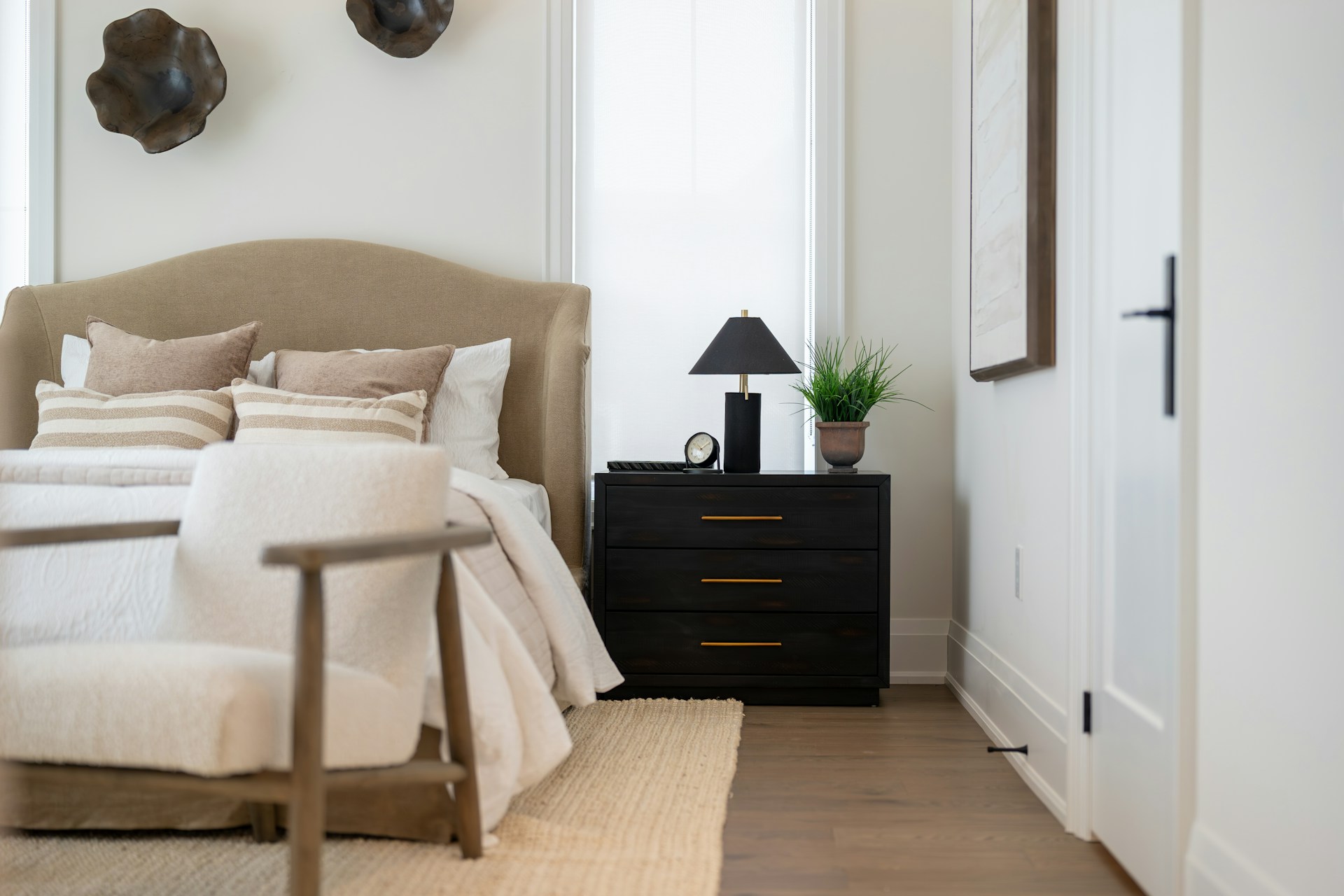
The bedroom is the most intimate room in any home — the space where you begin and end every day, where rest is found or frustrated, and where the quality of the environment has the most direct measurable impact on your physical and mental health. A well-designed bedroom supports deep, restorative sleep, makes getting up in the morning less unpleasant, and creates a sense of personal sanctuary that contributes significantly to overall wellbeing. This guide covers every dimension of bedroom design — from colour and light to furniture placement and textile choices.
The One Principle Every Bedroom Must Follow
Every design decision in a bedroom should be evaluated against a single criterion: does it support or undermine rest? Stimulating colours, harsh lighting, visual clutter, screen exposure, and work-related objects all compromise the bedroom’s fundamental purpose. The starting point for every bedroom design is ruthless simplification — reducing the room to its essential functions and building beauty on top of that foundation, rather than adding visual interest that competes with calm.
Bedroom Colour: What Works and What Does Not
Colour has a measurable physiological effect on the nervous system — and this effect is more significant in the bedroom than anywhere else in the home because you spend several hours there in a relaxed, semi-conscious state. The colours that consistently produce the most restful bedrooms are the cool and neutral ends of the warm spectrum: soft blues, sage greens, gentle greys, warm whites, dusty rose, and earthy neutrals in their lighter values.
- Best bedroom colours: Soft sage green, warm white (SW Alabaster, Farrow & Ball All White), dusty blue-grey, pale blush, greige (grey-beige blend).
- Colours to use carefully: Deep jewel tones — navy, forest green, charcoal — work beautifully in bedrooms when used on a single wall (particularly the headboard wall) rather than all four.
- Colours to avoid for sleep: Bright reds, saturated oranges, and vivid yellows are physiologically stimulating and consistently produce poor sleep quality feedback in bedroom colour research.
Good to Know: The colour of your ceiling matters more than most people realise. A ceiling in the same white as the walls makes a room feel taller. A ceiling in a slightly warmer white than the walls creates a wrapped, cosy feeling. A ceiling painted in a deep colour — unusual but increasingly popular — creates extraordinary drama and intimacy.
The Headboard Wall: Your Bedroom’s Focal Point
The wall behind the bed is the bedroom’s natural focal point — the first thing you see when you enter and the surface that defines the room’s character most powerfully. Give it emphasis. Options range from wallpaper (a single panel or full wall), a distinct paint colour that differs from the other walls, an upholstered fabric panel, a large piece of calm artwork hung at the correct eye-level height, or a statement headboard that extends significantly up the wall.
Bedroom Furniture: What You Need and What You Do Not
| Furniture Piece | Guidance |
| Bed | The room’s anchor piece. Invest here above anything else. A bed with built-in storage solves two problems simultaneously. |
| Bedside tables | One on each side if space allows. Height should match the top of the mattress. Lamps on both sides. |
| Wardrobe | Built-in maximises space in most bedrooms. Freestanding works well in rooms with alcoves or irregular walls. |
| Chest of drawers | Only if the wardrobe does not provide sufficient drawer storage. Avoid doubling up unnecessarily. |
| Seating | A single chair or small bench at the foot of the bed adds utility without cluttering. Avoid desks if possible. |
| Television | If present, concealed in a cabinet or behind a curtain. Screens in bedrooms reduce sleep quality significantly. |
For bedroom design inspiration that prioritises lasting quality and considered aesthetics over trend-following — understanding how colour, material, and light combine to create genuinely restful spaces — Decor Luxury Home consistently offers a quality-first perspective that is particularly relevant for bedrooms, where getting the fundamentals right matters more than being fashionable.
For homeowners whose bedroom design plans involve fitted wardrobes, built-in headboards, new flooring, or structural changes, Guild of Handymen connects you with the skilled tradespeople who can deliver the carpentry, decorating, and fitting work to a high professional standard.
Bedroom Lighting: The Most Underestimated Element
Most bedrooms fail on lighting — a single ceiling pendant or overhead light creates a harsh, institutional atmosphere that is the opposite of restful. The bedroom should have at least four light sources: a ceiling light on a dimmer for getting dressed and general use, a bedside lamp on each side for reading, and ideally one additional accent source — a floor lamp, candles, or LED strip lighting behind the headboard for evening atmosphere. All bulbs should be warm white at 2700K maximum.
Q: What colour should I paint my bedroom?
A: For most bedrooms, warm whites, soft greiges, and muted sage greens consistently produce the most restful, visually balanced results. Sherwin-Williams Alabaster, Farrow & Ball Elephant’s Breath, and Dulux White Mist are perennially popular for good reason. If you want more colour, introduce it on the headboard wall alone and keep the other three walls in a complementary neutral.
Q: How do I make a small bedroom look bigger?
A: Use light paint on walls and ceiling (removing the visual boundary between the two surfaces creates height), hang curtains from ceiling to floor extending well beyond the window frame, use a bed with built-in storage to eliminate extra furniture, and place a large mirror on the wall opposite the window. For styling guidance on making small spaces feel generous and beautiful, LifeLine Home Style is an excellent resource.
One thought on “Bedroom Design Ideas 2026: Create a Space That Looks Beautiful and Helps You Sleep Better”