
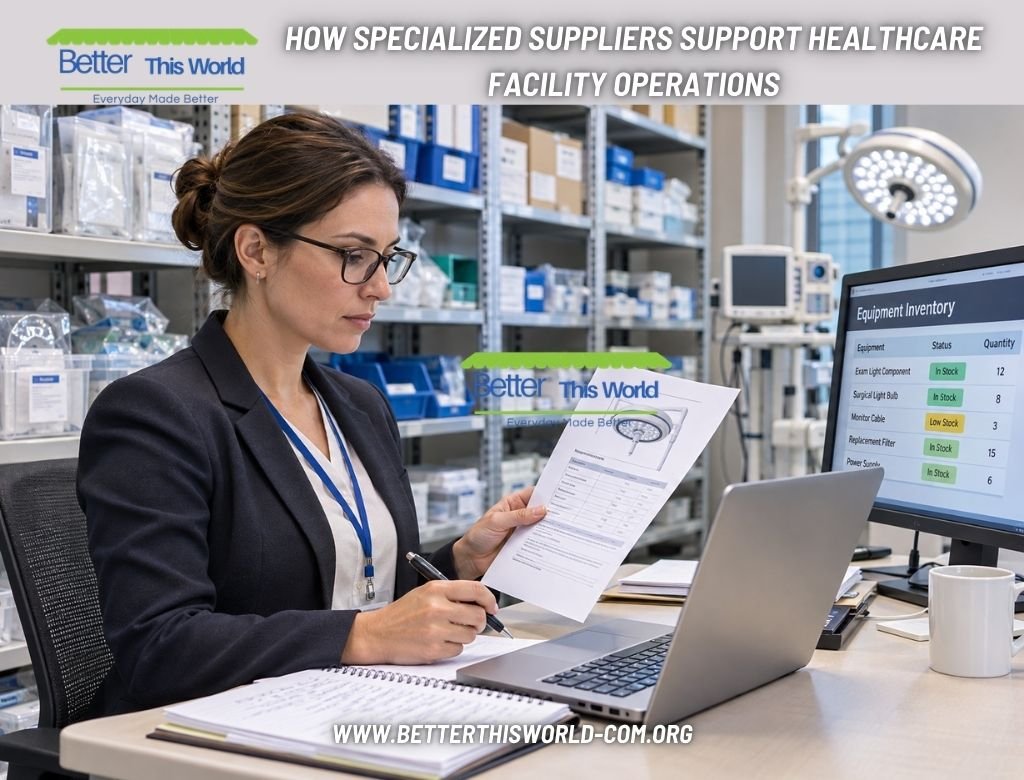
Healthcare organizations rely on a complex network of suppliers to maintain the equipment, infrastructure, and resources required for daily operations. From hospitals and outpatient clinics to diagnostic centres and specialized treatment facilities, reliable equipment availability is an important part of maintaining consistent services.
However, purchasing healthcare equipment is rarely as straightforward as ordering standard office supplies. Many products involve technical specifications, compatibility requirements, replacement components, and ongoing maintenance considerations.
For procurement professionals and facility managers, working with specialized suppliers can help address these challenges. Their industry knowledge and access to specific equipment categories support more informed purchasing decisions, better inventory planning, and greater operational stability.
Understanding how these relationships function provides useful insight into the broader healthcare supply chain and the importance of specialized sourcing in technically demanding industries.
Why Healthcare Equipment Procurement Requires Specialized Knowledge
Healthcare procurement involves purchasing decisions that can affect multiple departments, operational budgets, maintenance schedules, and long-term equipment performance.
Unlike general business purchases, healthcare equipment often requires careful evaluation of technical requirements. A replacement component may need to match an existing system, while a new equipment purchase may need to satisfy installation, maintenance, and facility-specific requirements.
This complexity creates several considerations for procurement teams.
Equipment specifications must be verified before orders are placed. Product availability must be assessed against operational needs, and purchasing decisions must account for maintenance requirements and expected equipment lifecycles.
Healthcare equipment suppliers help organizations navigate these considerations by providing access to relevant product categories and information about equipment specifications.
Specialized knowledge becomes particularly valuable when organizations operate multiple facilities or maintain equipment acquired from different manufacturers.
In these situations, procurement teams may need to coordinate purchasing across departments while ensuring that replacement products remain compatible with existing infrastructure.
A supplier familiar with a specific equipment category can help purchasing teams identify relevant options and reduce uncertainty during the sourcing process.
Managing Equipment Availability and Replacement Components
Maintaining equipment availability is an ongoing responsibility for healthcare facility operations.
Even well-maintained equipment requires periodic servicing, component replacement, and eventual upgrades. When a necessary part becomes unavailable, maintenance teams may face delays that affect room readiness, staff scheduling, or planned facility activities.
For this reason, replacement components are an important part of healthcare supply chain planning.
Organizations must consider not only the initial purchase of equipment but also the availability of compatible parts throughout its working life.
Specialized equipment sourcing can support this process by connecting procurement teams with suppliers familiar with specific equipment categories and replacement requirements.
For example, a facility maintaining examination or surgical lighting systems may need replacement lamps, lighting components, or compatible accessories. Identifying the correct component can involve reviewing manufacturer information, equipment models, and technical specifications.
Ordering an unsuitable replacement can create additional costs, administrative work, and maintenance delays.
Specialized distributors can help reduce these risks by supporting accurate product identification and communicating availability before purchasing decisions are finalized.
Healthcare organizations can also benefit from keeping detailed equipment records, including model numbers, maintenance histories, and commonly replaced components.
When combined with dependable supplier relationships, these records can make recurring procurement tasks more predictable and reduce time spent resolving equipment-related purchasing issues.
The Role of Specialized Suppliers in Healthcare Procurement
A well-managed healthcare supply chain often includes a combination of broadline distributors, manufacturers, and specialized businesses serving particular equipment categories.
General distributors can provide purchasing convenience across a wide range of supplies. However, certain procurement requirements involve equipment or components that may fall outside their core expertise.
This is where specialized medical equipment suppliers contribute to the broader purchasing network.
Their role is not necessarily to replace larger distributors. Instead, they can complement established procurement arrangements by supporting technical purchasing requirements that demand more focused product knowledge.
For example, ValleyMed is a Canadian business serving specialized healthcare equipment and medical lighting needs. Its position within this category illustrates how niche suppliers form part of a wider procurement ecosystem involving equipment maintenance, product sourcing, and facility support.
For healthcare organizations, the value of working with category-specific suppliers often comes from access to relevant technical information and clearer communication about equipment requirements.
Procurement professionals can use this knowledge when comparing products, confirming compatibility, and reviewing replacement options.
These relationships can be particularly useful when equipment is older, purchasing volumes are relatively small, or replacement requirements fall outside standard inventory lists.
Rather than evaluating suppliers solely on product price, organizations can consider the quality of technical information, responsiveness, order accuracy, and consistency of supply.
These factors influence the total administrative and operational costs associated with equipment procurement.
Building Supplier Relationships That Support Operational Continuity
Supplier management is an important component of long-term operational planning.
Healthcare organizations frequently work within defined purchasing budgets while balancing equipment reliability, facility maintenance requirements, and changing operational demands.
An effective supplier relationship can make these responsibilities easier to coordinate.
For procurement teams, this begins with clear communication about purchasing requirements. Suppliers need accurate equipment information, expected quantities, delivery expectations, and relevant technical specifications.
Organizations should also establish consistent procedures for evaluating supplier performance.
Useful measures may include order accuracy, delivery reliability, response times, product compatibility, and the ability to communicate potential supply constraints.
These measures help purchasing departments identify reliable partners and determine where additional sourcing arrangements may be necessary.
Maintaining alternative supplier options is equally important. Depending entirely on one source for essential components can increase exposure to inventory shortages, shipping delays, or product discontinuation.
A balanced supplier network provides additional flexibility without requiring organizations to maintain excessive inventory.
Long-term relationships also create opportunities for better planning. When suppliers understand recurring equipment needs, procurement teams can communicate upcoming maintenance projects, replacement schedules, and anticipated purchasing requirements more effectively.
This information supports purchasing efficiency and helps organizations identify potential supply issues before they affect daily operations.
Making Specialized Sourcing Part of Long-Term Facility Planning
Equipment procurement should be considered throughout the operational lifecycle of a healthcare facility, not only when a new purchase becomes necessary.
Facilities benefit from connecting purchasing decisions with maintenance planning, asset management, and long-term budget forecasting.
For example, before acquiring equipment, procurement teams can assess whether replacement components are readily available, whether technical support resources are accessible, and how the equipment will integrate with existing systems.
These considerations help organizations evaluate the full cost of ownership rather than focusing exclusively on initial purchase prices.
Inventory planning is another important consideration.
Maintaining a reasonable supply of frequently replaced components can reduce the risk of avoidable downtime. However, excessive inventory can tie up capital and create storage challenges, particularly when products have limited compatibility or become obsolete.
Coordination between procurement, maintenance, and facility management teams helps establish purchasing priorities based on actual operational requirements.
Specialized suppliers can contribute to these discussions by providing information about product availability, replacement options, and changing equipment requirements.
For Canadian healthcare organizations, a structured approach to supplier selection and equipment planning can improve purchasing consistency while supporting responsible resource management.
Ultimately, effective healthcare facility operations depend on more than obtaining equipment when it is needed. They require coordinated procurement processes, accurate technical information, reliable supplier relationships, and forward-looking maintenance strategies.
Specialized suppliers remain an important part of this system, helping organizations manage technical purchasing complexity while supporting the continuity of essential facility operations.