
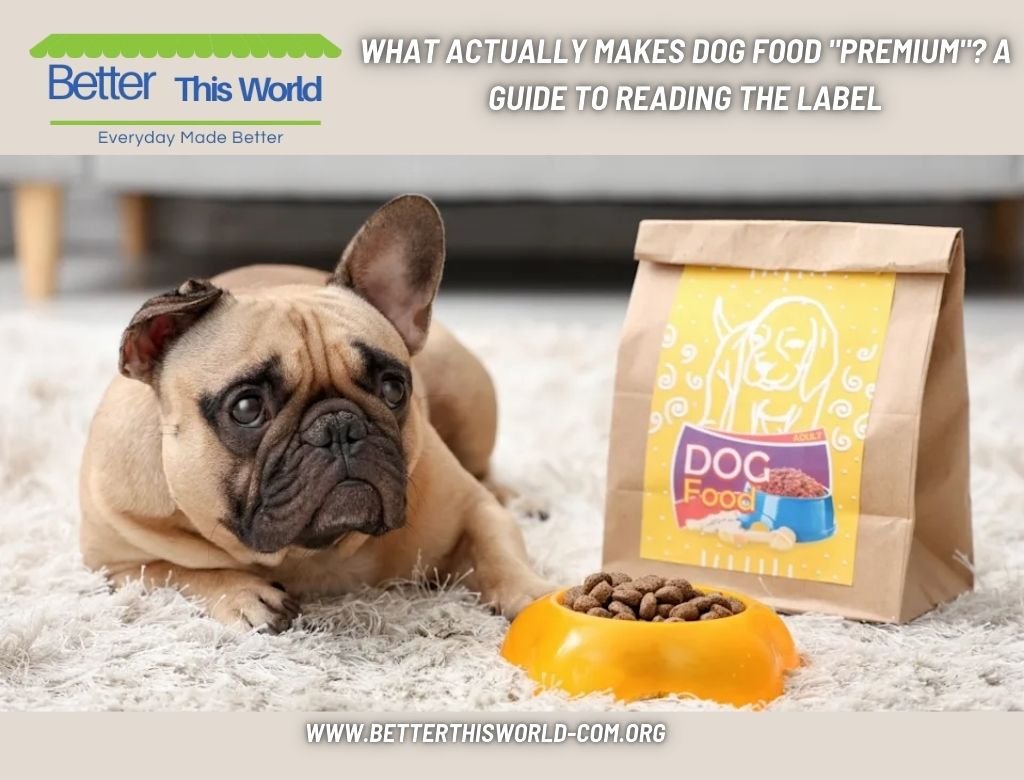
Walk down any pet food aisle and the word “premium” shows up on bags at almost every price point, from mid-range grocery store brands to $80-a-bag specialty foods. Unlike terms such as “organic,” which has a legal definition in food labeling, “premium” isn’t a regulated term in pet food — which means it’s worth understanding what actually separates a genuinely higher-quality food from one simply using the word as marketing.
Why “Premium” Isn’t a Regulated Term
The Association of American Feed Control Officials (AAFCO), which sets the model regulations most U.S. states adopt for pet food labeling, does not define or regulate the word “premium,” “gourmet,” or “super premium” on packaging. This is different from terms like “complete and balanced,” which does carry specific regulatory meaning tied to nutritional adequacy testing. In practice, this means “premium” can be used by nearly any manufacturer regardless of actual ingredient quality, which is exactly why the label alone isn’t a reliable guide.
What to Actually Look At Instead
The ingredient list and where protein comes from. AAFCO requires ingredients to be listed by weight, so a named animal protein (like “chicken” or “salmon”) appearing in the first one or two positions generally indicates a meaningfully higher meat content than a food led by grains or unnamed “meat meal.” Named protein meals (such as “chicken meal”) aren’t necessarily lower quality than fresh meat — meal is a concentrated protein source with water already removed — but unnamed or generic terms like “animal meal” indicate a lower-traceability ingredient sourced from unspecified animals.
Guaranteed analysis versus actual nutrient density. The guaranteed analysis panel lists minimum percentages of protein and fat and maximum percentages of fiber and moisture, but doesn’t account for ingredient quality or digestibility. Two foods with identical percentages can differ significantly in how much of that protein a dog actually absorbs, which the label alone can’t show.
AAFCO nutritional adequacy statement. Every complete and balanced food must state which life stage it’s formulated for (puppy, adult, all life stages, etc.). And whether that was determined by formulation or by an actual feeding trial. Foods substantiated through feeding trials generally provide stronger evidence of real-world nutritional adequacy than formulation alone. Though both are legally permitted.
Manufacturing and sourcing transparency. Companies willing to disclose where ingredients are sourced and where the food is manufactured. Rather than only listing a corporate address — tend to reflect more accountability in their supply chain. Since traceability makes recalls and quality issues easier to catch and address.
Common Marketing Terms Worth Understanding
- “Human-grade” is one of the few terms with an actual legal standard, requiring every ingredient. And the entire manufacturing process to meet human food safety standards — a meaningfully higher bar than standard pet food regulations. And one that relatively few products can legitimately claim.
- “Grain-free” simply means the absence of grain as a carbohydrate source, not necessarily a higher-quality food. Grain-free foods still contain carbohydrates from other sources like potatoes or peas. The FDA has also investigated a potential link between certain grain-free diets and a heart condition called dilated cardiomyopathy (DCM) in dogs. Though the exact relationship is still being studied and isn’t fully established.
- “Natural” does have an AAFCO definition, generally meaning ingredients derived from plant, animal, or mined sources. Without chemically synthesized additives (with some exceptions for added vitamins and minerals). But it says nothing about overall nutritional quality or ingredient sourcing.
Why Independent Selection Matters
Because so much pet food marketing language isn’t independently regulated. Many pet owners rely on standalone pet retailers that curate their inventory to a smaller set of vetted brands. Rather than trying to evaluate every option on a big-box shelf themselves. RedRidge Pet Market, a Richmond, Virginia-based premium dry dog food retailer. Is one example of a store built around this kind of curated model, selecting a narrower range of foods based on ingredient sourcing and manufacturing practices rather than stocking every widely available brand — an approach that shifts some of the label-reading work from the individual pet owner to the retailer’s own vetting process.
The Bottom Line
The word “premium” on a dog food bag isn’t a reliable quality signal by itself. Since it carries no regulatory weight. Reading the actual ingredient list, checking the AAFCO nutritional adequacy statement. And understanding which marketing terms (like “human-grade”) actually have legal definitions versus which don’t (like “premium” or “gourmet”). Gives a far more accurate picture of what’s actually in the bag than the front-of-package language alone.