
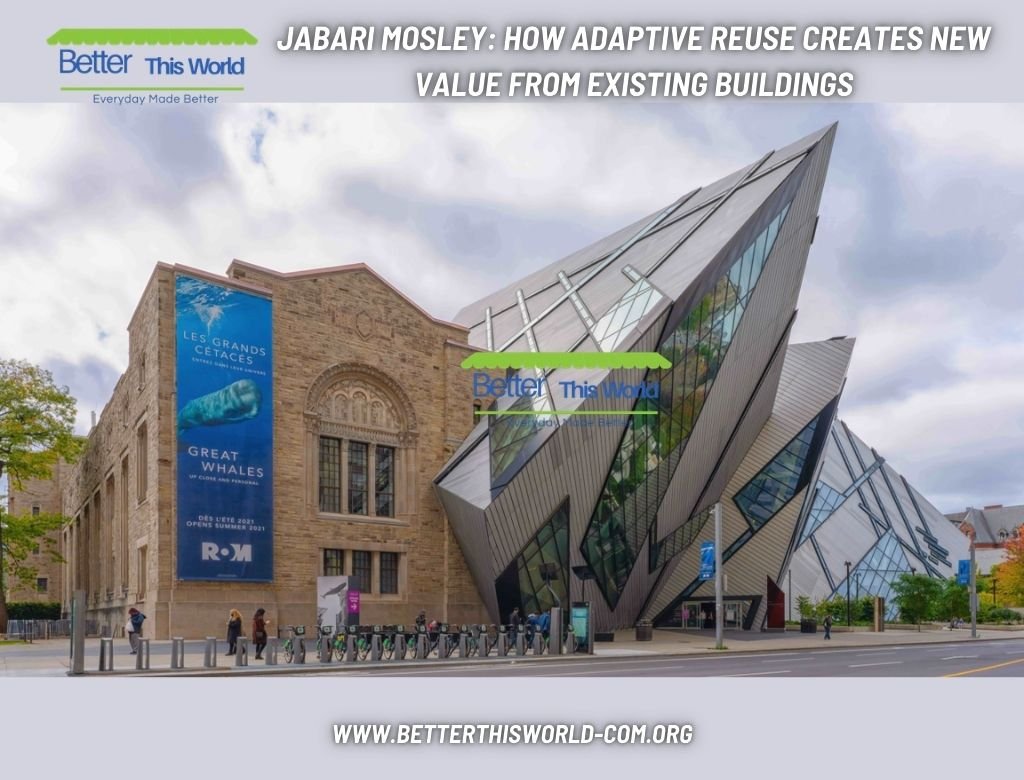
Since 2022, Jabari Mosley has owned Cornerstone Quality Construction, a licensed Alabama home builder that takes on new builds, property flips, and contract projects for universities and municipalities in Alabama, Georgia, and Louisiana.
His construction and development background also includes more than two decades leading Driven Properties and Investments, a Birmingham-based acquisition, remodeling, and rental business that now manages more than 100 properties. He has also owned the real estate development firm Infinity Investments since 2010.
A graduate of the University of Alabama at Birmingham with a degree in information systems, Mosley has additionally owned Trilogy Technology and the award-winning Paramount Auto dealership earlier in his career. That broad exposure to renovating, building, and repositioning properties provides useful context for the overview below of adaptive reuse, a strategy that converts existing buildings for new purposes rather than replacing them.
What Is Adaptive Reuse?
Adaptive reuse is the process of converting existing buildings for new purposes rather than demolishing them and starting from scratch.
In real estate, this approach allows investors and developers to transform underused properties into functional spaces that meet changing market demands while preserving valuable structures.
Common Examples of Adaptive Reuse
Common examples include converting old warehouses into apartments, former office buildings into residential units, and outdated retail spaces into restaurants or mixed-use developments.
Historic schools, factories, and hotels can also be repurposed, keeping their original architectural features as part of the property’s appeal.
Benefits for Developers and Communities
One of the main advantages of adaptive reuse is the potential to reduce construction waste and make better use of existing resources. Retaining a building’s structure can also help shorten certain stages of development compared with new construction.
In established neighborhoods, repurposing vacant properties may attract new businesses, increase activity, and contribute to revitalization.
Opportunities for Real Estate Investors
For real estate investors, adaptive reuse can create opportunities to acquire properties that no longer serve their original purpose but may have significant redevelopment potential.
Challenges to Consider
However, success depends on careful planning and financial analysis. Older buildings may require extensive upgrades to meet current building codes, accessibility requirements, fire safety standards, and energy efficiency expectations.
Zoning restrictions, environmental concerns, and structural issues can also affect project costs and feasibility.
Evaluating a Property Before Purchase
Before purchasing a property for adaptive reuse, investors should evaluate its condition, location, renovation requirements, and potential demand for the intended use.
Consulting architects, engineers, contractors, and local planning officials can help identify challenges early.
About Jabari Mosley
A business leader based in Birmingham, Alabama, Jabari Mosley has built a career spanning real estate investment, development, and construction. He has owned Driven Properties and Investments for more than two decades, expanded into development through Infinity Investments in 2010, and became the owner of the licensed home builder Cornerstone Quality Construction in 2022.
Mosley holds a bachelor of science in information systems from the University of Alabama at Birmingham and previously owned Trilogy Technology and Paramount Auto.